
Founder
Health Tech
The student-led initiative focusing on technology application in respiratory diagnosis for underserved community
I founded Health Tech with a question that gradually became the purpose behind everything we did: What if medical technology could reach people who needed it most, rather than remaining confined to hospitals and research laboratories? I was fascinated by artificial intelligence and respiratory diagnosis, but I soon realized that building technology was only one part of the challenge. The harder part was making sure it could serve real people.


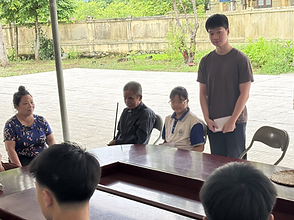
That realization shaped the way I led the club. During our three-day charity programs in northern Vietnam, I witnessed how basic healthcare support could make a difference in underserved communities. We provided health checks, nutritional counseling, and free medicines to more than 100 elderly people and children. I began to understand that healthcare inequality was not simply a matter of lacking advanced equipment; sometimes, it began with limited access to information, preventive care, and essential resources. These experiences made our mission feel personal. I no longer wanted Health Tech to be a club that discussed medical innovation from a distance. I wanted us to connect innovation with action.
Sky Lung became one of our most meaningful attempts to do so. After developing the AI-powered lung X-ray analysis website, we piloted it at five health stations in Lao Cai, processing more than 100 chest X-rays to support doctors' preliminary screening. The reported 30% reduction in triage time encouraged me, but the experience also changed how I viewed technological progress. A model's performance mattered, yet so did its usefulness in a real clinical workflow. I began to see technology not as a replacement for medical professionals, but as a tool that could help them make better use of their time and expertise.


I also wanted Health Tech to make complex medical ideas accessible beyond the clinic. Through more than 50 communication campaigns on respiratory diseases and AI-assisted diagnosis, we reached approximately 3,000 views per article. I organized three online workshops on wearable smart sensors for respiratory health monitoring, inviting alumni from Dartmouth College and Northeastern University to share their perspectives with more than 100 participants. Each initiative reminded me that awareness can be the first step toward prevention, and curiosity can become the beginning of meaningful change.




I also wanted Health Tech to make complex medical ideas accessible beyond the clinic. Through more than 50 communication campaigns on respiratory diseases and AI-assisted diagnosis, we reached approximately 3,000 views per article. I organized three online workshops on wearable smart sensors for respiratory health monitoring, inviting alumni from Dartmouth College and Northeastern University to share their perspectives with more than 100 participants. Each initiative reminded me that awareness can be the first step toward prevention, and curiosity can become the beginning of meaningful change.
Head of Content & Pianist
PINK STATIC
The music club promoting diversity and inclusion among high school students in Hanoi
When I joined Pink Static as Head of Content and a pianist, I began to see music as more than a performance. To me, it was a language that could bring together students with different backgrounds, tastes, and ways of expressing themselves. I wanted our music to make everyone feel that they belonged.
My journey unfolded through two music events in Hanoi, where I led communication campaigns blending traditional Vietnamese instruments with modern sounds. Reaching around 500 audience members at each event showed me how music could connect generations and styles that might otherwise seem worlds apart. Behind every performance was another kind of rhythm: planning content, coordinating promotion, and helping our message reach people beyond the stage.


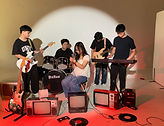
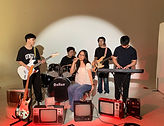


I also managed Pink Static’s Facebook page, growing its community to 1,000 followers, and promoted fundraising campaigns that raised US$5,000 to purchase musical instruments for five high schools in Hanoi. This gave my work a meaning beyond audience numbers. Every post could invite someone to listen; every contribution could help another student discover the joy of making music.


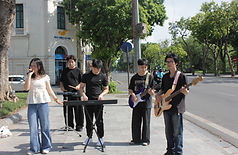

As a pianist, I learned that the most powerful music is not always about playing the loudest or most difficult notes. Sometimes, it is about creating space for others to be heard. Pink Static taught me that inclusion, like music, begins when we listen—and becomes meaningful when everyone has the chance to join the melody.
Vice President
Accessible Technological Engineering Club
A student-led educational club inspiring STEM passion for children in Vietnam.
When I became Vice President of ATEC, I wanted to make STEM feel less like a collection of difficult formulas and more like a world children could explore with their own hands. I still believed that the best way to understand technology was not simply to read about it, but to build something, make mistakes, and discover why it worked.
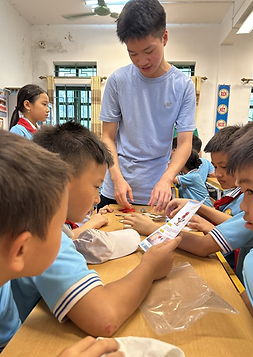

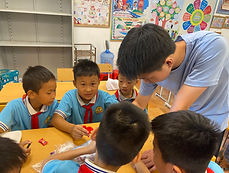

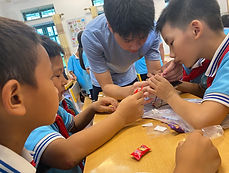

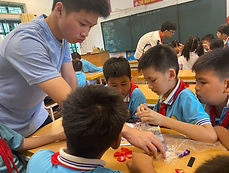
I began by developing more than 20 Python and AI lessons, turning abstract concepts into hands-on projects for over 300 middle and high school students. Yet my most meaningful lessons often happened beyond the screen. At a STEM Fair in Ninh Binh, I coordinated a five-member academic team to introduce 100 students to physics, artificial intelligence, and applied technology. I learned that teaching required more than knowing the answers; it meant finding a way to make someone else curious enough to ask the next question.
That belief became even more important when I helped maintain monthly online AI classes for students in northern mountainous provinces. Across 13 sessions, I wanted distance to become less of a barrier to opportunity. Later, in Da Nang, I led robotics activities for 50 disadvantaged children. As they assembled LEGO robots and experimented with block-based programming, each challenge became an invitation to try again rather than a reason to give up.

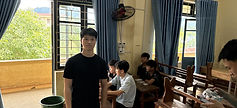


Serving as Vice President taught me that leadership was not about standing at the front of a classroom. It was about creating opportunities for others to discover what they could do. Every lesson, workshop, and robot we built together strengthened my conviction that STEM education matters most when it transforms curiosity into confidence—and gives every child the chance to imagine, create, and innovate.
Author & Blog Owner
An aviation educational blog for children in Vietnam
I started Wings of Dreams with a simple belief: a child should not need to stand beside an airport runway to discover the wonder of aviation. Through this blog, I wanted to bring the world of aircraft closer to Vietnamese children, turning distant machines into stories they could understand, question, and dream about.
My journey began with research and writing. As I explored the history of flight and the evolution of aircraft, I realized that every plane carried more than engineering innovations; it carried stories of human curiosity, courage, and imagination. I wrote 23 articles, hoping each one could spark a new question in a young reader’s mind. When the blog reached over 10,000 readers and inspired more than 100 discussion comments, I began to see that these stories were becoming more than words on a screen.


I wanted children to experience aviation with their own hands, not just through reading. I collaborated with designers and web developers to make the website welcoming and easy for young readers to navigate. Then came one of the most meaningful moments of the project: introducing Wings of Dreams to 50 children at Tran Hung Dao Primary School in Ha Nam. We built model airplanes and miniature airport structures together. I could imagine the room filling with questions about wings, engines, and how aircraft stayed in the sky. Watching children turn simple materials into their own little flying worlds reminded me why I had started.


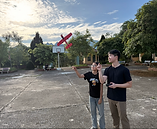


Wings of Dreams taught me that education does not always begin in a classroom or with a textbook. Sometimes, it begins with a story, a handmade airplane, or a child asking, “How does it fly?” As the founder and writer, I learned that my role was not simply to share knowledge, but to make curiosity feel accessible. I hope Wings of Dreams gives children not only a glimpse of aviation, but also the confidence to imagine a future they have never seen before.
Head of Academic Department
STEM Exploration Day
The club provides STEM workshops for high school students.
When I became Head of the Academic Department at STEM Exploration Day, I wanted to help students see technology not as a distant, complicated world, but as a place where their own curiosity could lead them. I knew that choosing a future career was daunting, especially when so many emerging fields remained unfamiliar to high school students.


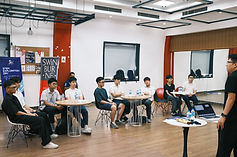


What I valued most was the possibility that one presentation could change how a student imagined their future. Perhaps someone who had never considered a career in technology would leave with a new question, a fresh ambition, or the courage to explore an unfamiliar subject. That possibility gave our preparation purpose beyond slides and schedules.

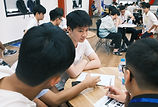

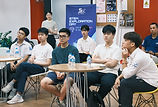


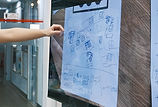
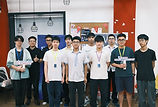

STEM Exploration Day taught me that education is not simply about delivering information; it is about opening doors—and helping students believe they have the ability to walk through them.


